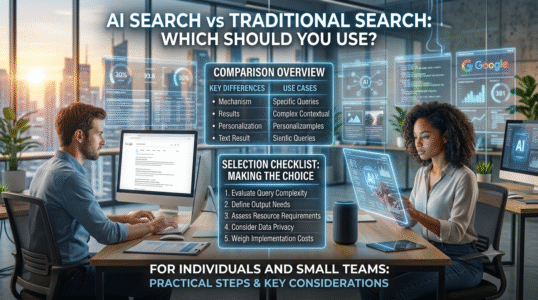
This guide to ai search vs traditional search: which should you use? explains the core concepts, practical decisions, and common mistakes to watch for. Use the steps below as a starting point, then verify details against the tools and requirements in your own workflow.
Know the difference in the output
A search engine returns links and snippets that let you inspect the source directly. An AI answer may combine multiple pages into a summary, which can be convenient but can also obscure disagreements or attach a claim to the wrong citation.
Choose based on the task
For definitions, brainstorming, or an initial overview, an AI summary can help orient you. For current prices, legal requirements, original statistics, or controversial claims, open authoritative sources and check dates. For shopping or complex research, compare multiple independent pages.
Use a two-step process
Start with an AI-generated map of the topic, then search for primary evidence and contrary views. Follow citations to their original pages and note when an answer is based on old material. If no reliable source supports a claim, leave it out.
Practical checklist
Treat generated summaries as a starting point, not as a replacement for reading the sources that matter.
Editorial note: This educational guide explains general methods and does not claim independent product testing. Check official documentation for current features, pricing, and terms before making decisions.