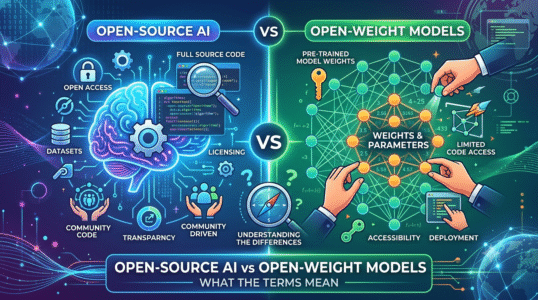
This guide to open-source ai vs open-weight models: what the terms mean explains the core concepts, practical decisions, and common mistakes to watch for. Use the steps below as a starting point, then verify details against the tools and requirements in your own workflow.
Weights are only one part of a model
Model weights are learned numerical parameters used during inference. A download may provide those weights without including the training data, complete training code, data-processing recipe, or evaluation details. That makes the model inspectable and deployable in some ways, but not necessarily reproducible from scratch.
Read the licence, not just the download page
Licences can restrict certain uses, impose attribution requirements, or define conditions for redistribution and commercial deployment. Also review the model’s acceptable-use policy, hardware requirements, and security update process. Legal obligations may differ between the model, its code, and associated datasets.
Choose based on the job
Hosted models can be easier to maintain and may offer strong managed features. Local or self-hosted weights can provide more control over infrastructure and data flow, but shift responsibility for serving, monitoring, security, and updates to your team.
Practical checklist
Record the exact model version, licence, source, evaluation results, and deployment plan before relying on a model.
Editorial note: This educational guide explains general methods and does not claim independent product testing. Check official documentation for current features, pricing, and terms before making decisions.